
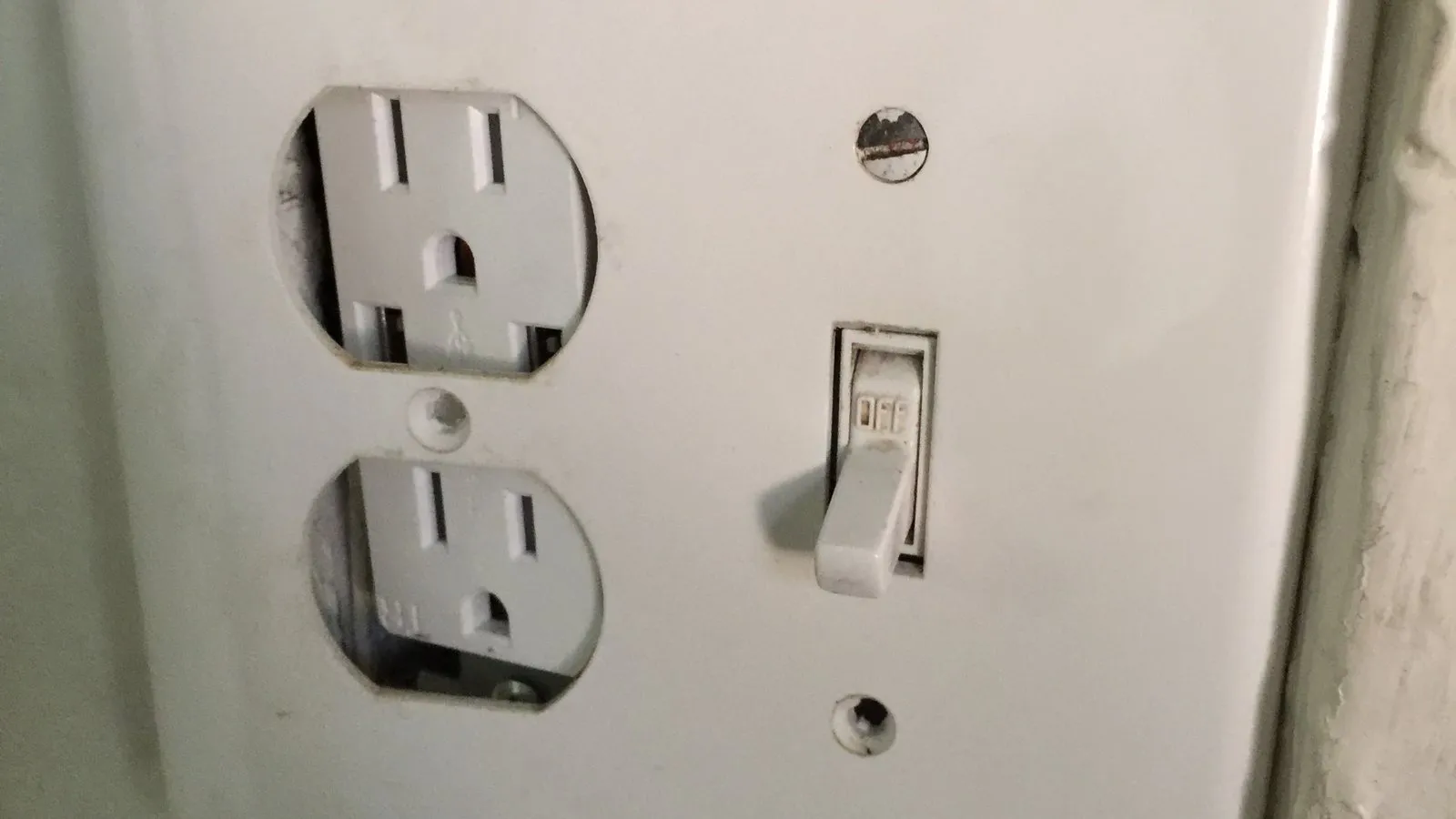
The plug does not fit. The appliance has three prongs, the wall has two slots, and the box says to use it on a grounded outlet. An ungrounded outlet is one of the most common surprises in an older Vancouver, WA home, and the quick fixes people try first are not the right ones.
Most of the time it is not an emergency. It is a decision about how much of the house's wiring you want to bring up to date, and there is more than one acceptable way to go.
What an Ungrounded Outlet Is
A grounded outlet has a third connection that links the outlet to the grounding path in the wiring. If something inside a device fails, that path gives the fault current a safe route and helps trip the breaker.
An ungrounded outlet has no such connection. Two slots and no round hole is the usual giveaway, and it is common in homes with older wiring. If your house still has knob and tube wiring, there is no ground wire at all, because that wiring never had one.
How to Spot an Ungrounded Outlet in Your Home
Look first. Two slots mean no ground. Then check the three-slot outlets, because a three-slot outlet in an old house is not proof of a ground. Someone may have replaced a worn outlet with a three-slot one and connected nothing to the third terminal.
A plug-in outlet tester, sold at hardware stores, will flag an open ground. It is a clue, not a diagnosis. Do not open the outlet to look behind it. An electrician can confirm what is connected, and can check the panel and the cable at the same visit.
Why a Three-Prong Adapter Does Not Fix It
A cheater plug lets a three-prong cord fit into a two-slot outlet, and that is all it does. It does not create a ground. The adapter's grounding tab only helps if the screw it attaches to is itself connected to a real ground, and in many older houses it is not.
Swapping the outlet for a three-slot one without a ground behind it has the same flaw. It makes the outlet look grounded while the circuit stays ungrounded. The National Electrical Code treats that as something to avoid, which is why it requires specific labels.
The Ways to Fix an Ungrounded Outlet
The most complete fix is to give the circuit a real ground. Depending on the wiring, that can mean running a new grounded circuit or a ground wire back to the panel. It costs more up front and it is the answer that removes the question.
When that is not practical, NEC 406.4(D)(2) allows three alternatives, as Electrical Contractor Magazine explains:
- Replace it with another two-slot outlet.
- Replace it with a GFCI outlet marked "No Equipment Ground."
- Install a three-slot outlet protected by a GFCI, marked "GFCI Protected" and "No Equipment Ground."
With either GFCI option, the code does not let you run a ground wire from the GFCI to the outlets it protects. A GFCI protects people from shock by shutting off the power when current leaks. It does not provide a ground, which is why the label says what it says.
Why Older Wiring Changes the Answer
The right option depends on what is in the walls. Cloth-covered cable, knob and tube wiring, and aluminum wiring each call for a different plan, and in some houses it makes more sense to treat several outlets as part of a larger project.
That is where a whole-house rewiring estimate belongs. For a few outlets in one room, outlet installation or electrical repair may be all you need. Our post on GFCI and AFCI outlets explains the protection types you may be choosing between.
Ask the electrician how the permit and inspection will be handled, and read how electrical permits work in Clark County beforehand.
Before You Call an Electrician
A little preparation makes the first visit shorter and the estimate clearer:
- Take a photo of each two-slot outlet and note the room.
- Note which devices you plug into them, such as a computer, a refrigerator, or a space heater.
- Take a photo of the panel door, closed.
- Write down the year the house was built and any past rewiring you know of.
Send those to Newman Electric through the contact form and ask for a free estimate. Tell us which outlets you actually use, and we can plan around them.