
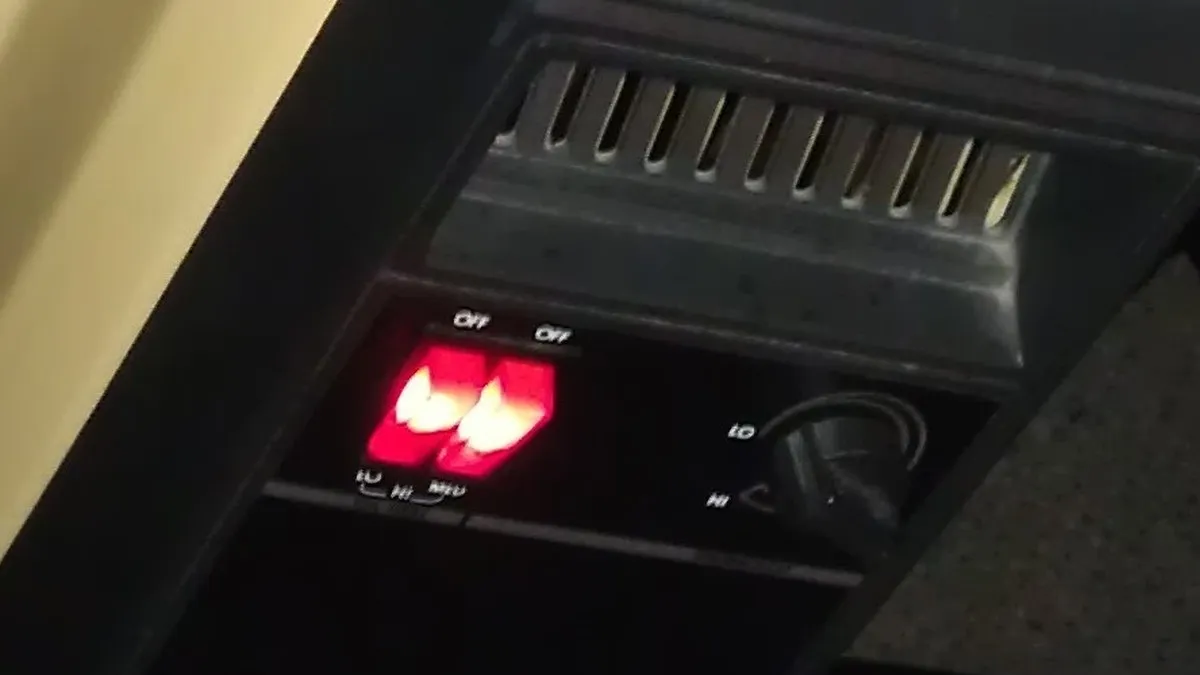
It is a cold morning, the heater has been on for ten minutes, and the room goes dark. A space heater tripping the breaker feels like a nuisance, but the breaker is doing exactly what it was built to do. It shut the circuit off before the wiring got too hot.
The useful question is not how to stop it from tripping. It is what the circuit is being asked to carry, and whether it can carry it safely.
Space Heater Tripping Breaker: What Is Overloading the Circuit
Heating is one of the heaviest things you can plug into a normal outlet. A heater draws steady power for as long as it runs, unlike a phone charger or a lamp. The result is that it uses up most of a circuit's capacity by itself.
Many bedrooms and living rooms share one circuit across several outlets and the ceiling light. The heater is only one load on it. Add a TV, a lamp, a vacuum, or a second heater in the next room, and the circuit goes past its limit.
Do the Amps Math
You can estimate the load from the label on the heater. Amps are watts divided by volts, and household outlets are 120 volts. A 1,500-watt heater draws 12.5 amps. A common bedroom circuit has a 15-amp breaker.
That leaves 2.5 amps for everything else on the circuit, which is not much. A hair dryer, a vacuum, or a second heater can use more than that alone. When the combined load passes the breaker's rating, it trips. For the other causes, see our post on why a breaker keeps tripping.
What to Check Before You Reset the Breaker
Unplug the heater and switch the breaker off, then on, one time. Then try these steps in order:
- Plug the heater straight into the wall, with nothing else running on that circuit.
- Lower the heat setting, or use a lower-wattage heater.
- Try an outlet on a different circuit, such as another room.
If it still trips with nothing else on, stop using the outlet. If a breaker trips again right after a reset, leave it off. Our post on a breaker that won't reset covers that case, and a repeat trip is worth a call for electrical repair.
Why Extension Cords and Power Strips Make It Worse
The Consumer Product Safety Commission's winter safety guidance is direct: plug electric space heaters into a wall outlet, never into an extension cord or power strip. It also says to keep heaters at least three feet from drapes, furniture, bedding, and other combustible materials, and to turn them off when sleeping.
A cord or strip adds another connection that carries the full load. A heater is a poor fit for any plug that was not made for that much current.
Warning Signs to Take Seriously
A trip with no other symptoms is a warning. A hot plug is more urgent. In its heater safety publication, the CPSC says that if the plug, the wall outlet, or the faceplate is hot, you should stop using the heater and have a qualified electrician check or replace the plug or faulty outlet. It also says the plug should fit tightly in the outlet.
If you smell burning, see discoloration on the outlet, or hear buzzing, unplug the heater and read what to do about a burning smell from an outlet. Do not keep using that outlet.
When a Dedicated Circuit or Heat Pump Makes Sense
If a room is cold every winter and you rely on a heater there, the lasting fix is to change the electrical setup, not to keep resetting the breaker. A dedicated circuit puts a heavy load on its own breaker, sized for that equipment.
For whole-room heating, a heat pump or mini-split is another route. It needs a 240-volt circuit, which our post on heat pump and mini-split electrical requirements explains. Newman Electric handles heat pump wiring, and an old panel may need attention first.
When to Stop and Call
Unplug the heater and call if any of these are true:
- The same breaker trips with the heater alone on the circuit.
- The plug, cord, outlet, or faceplate is hot.
- The outlet smells, buzzes, or looks scorched.
- Lights dim every time the heater cycles on.
Not sure what the circuit in that room can carry? Request a free estimate from Newman Electric, or call 360-828-7143, and tell us which room and which heater.